
As the demand for rental properties continues to grow, so does the creativity of scammers seeking to exploit eager renters. According to the Canadian Anti-Fraud Centre (CAFC), Canadians lost $23 million more to fraud and scams between 2022 and 2023 – this number includes rental scams. With the use of digital marketing and rental marketplaces, spotting rental scams has become harder over time. In this blog, we will discuss the most common rental scams and how to avoid falling victim to these fraudulent schemes.
The Most Common Rental Scams in Canada
1. What Is A Rental Scam?
A rental scam is when a property is misrepresented in an attempt to gain money from an unsuspecting prospective renter. There are many ways scammers will try and obtain your funds, but the main facet of these listing scams is often fake properties. Once the scammer has received your money, they will disappear – leaving you with empty hands and an empty wallet.
2. Fake Listings
Fraudulent listings use fake properties that do not exist, are not available, or are copied from a real landlord to attract renters to a place under illegitimate ownership. The information included in these listings is often fake or copied from either related listings or the original. Often, these listings will feature lower asking rents compared to similar buildings in order to make the price seem too good to be true. They have also altered the contact information to appear as a legitimate landlord. Once in contact, they will say that there is a lot of interest in the property and you need to pay a deposit to secure the apartment. Any situation where you are asked to pay deposits and fees upfront is suspicious. Other signs of a fake listing are bad spelling and grammar, blurry or low-quality images, and requesting payments be made through untraceable methods.
3. Let Us Review Some Real Examples Of Scams You May Encounter.
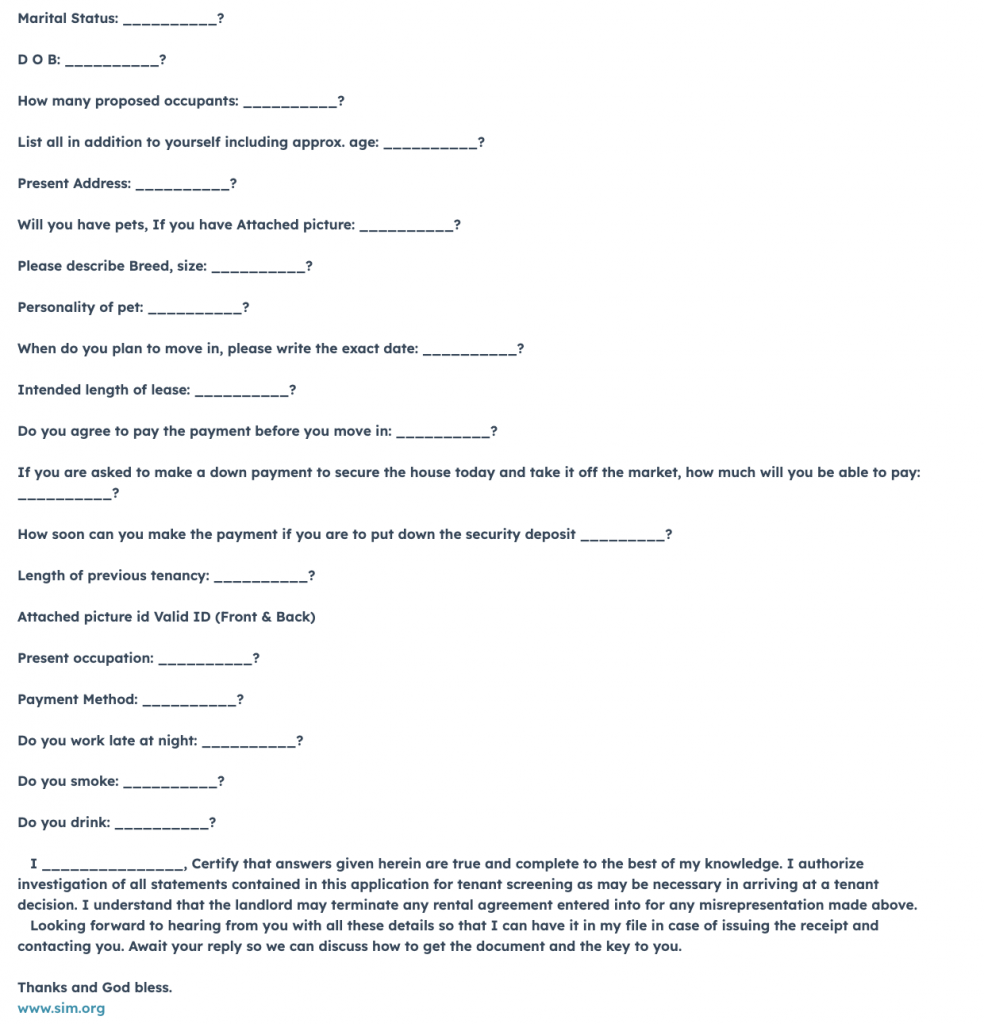
Scenario 1: Landlord is out of the country and requesting payment from a third party before viewing the property. Priced very low. The individual is requesting a lot of unnecessary information.

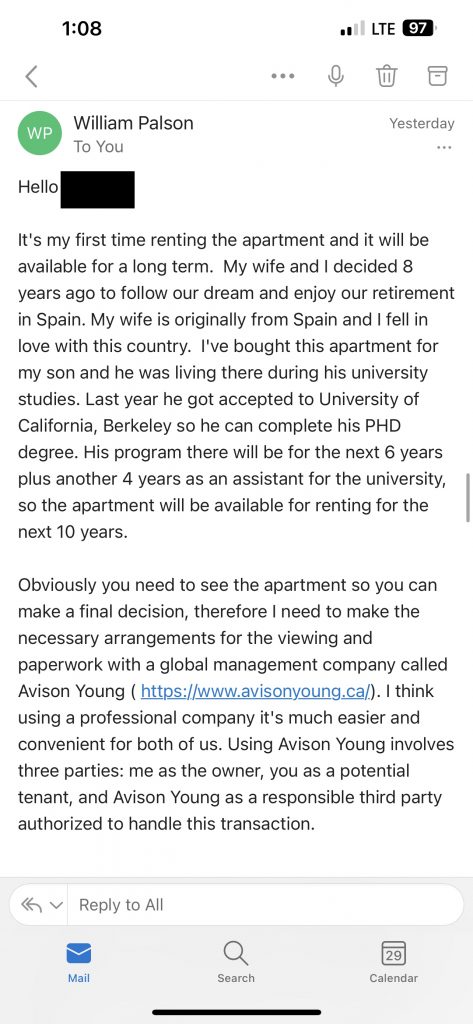
Scenario 2: The Landlord is out of the country and requesting payment from a third party before viewing the property. Priced very low. Offering to ship the keys after they receive payment.

How To Avoid:
- Use Verified Listings: On Rentals.ca, the verification appears as a little blue and white check next to the word ‘Verified.’

- View The Property: You can do this virtually or in-person. Inform the landlord that you won’t provide any money until you’ve seen the unit. Meeting both the landlord and viewing the unit before paying any fees ensures legitimacy and guards against potential scams.
- Research the Landlord: You can confirm the property owner’s identity ahead of time if it would help you feel more comfortable.
- Research Property Rates: Research rent prices to make sure the property’s rates align with similar homes in the area.
4. Bait-And-Switch Scams
A bait-and-switch scam is when the property that is listed is not the same one that is included in the lease agreement. Often, the address and unit included on the rental agreement have been swapped for a less desirable one. Once a prospective tenant has the contract, the landlord may rush them to sign it – hoping they will overlook the altered information.
How To Avoid:
- Pay Attention to the Details: Make sure the address and unit on the agreement match the one you visited during the tour.
- Document Everything: Whether it’s a virtual or in-person tour, take notes and pictures of everything. This way you can review them later and use them as evidence of any discrepancies between the listing, the toured unit and the newly proposed apartment.
5. Identity Theft
Scammers may attempt to commit identity theft by asking for sensitive and personal information in the rental application. This can be used to access financial information to take money from your account and apply for things such as loans, credit cards and more.
How To Avoid:
- Educate Yourself: Learn what information a landlord can and cannot ask for. For example, they can ask for references, proof of employment, income/salary and your credit score. They cannot ask for your Social Insurance Number (SIN) and cannot retain your tax documents, like T4 slips, for a long period of time.
6. Additional Finance Scams
There are many additional ways scammers can take to directly receive money. One option is through inflated background check fees. In these instances, the landlord will ask for potential tenants to pay for their background checks at higher prices. While landlords may do this, the scammer will often ask for a higher sum of money. Another form of a finance scam is deposit fraud. This is when the landlord will request expensive fees or rent upfront. Once they obtain this payment, they will disappear.
How To Avoid:
- Research Background Checks: In Canada, the estimated price ranges from $25 to $45 depending on the type of check (criminal, credit, etc.), so anything exponentially higher than this could be considered a red flag.
- Written Agreements: Do not give any rent or security deposits before a lease is signed.
- Avoid Untraceable Payment Methods: Do not give the landlord money through methods that cannot be tracked. This means wiring money through Venmo or PayPal as well as purchasing gift cards or prepaid credit cards.
- Consult a Professional: If you are unsure if what the landlord is asking for is legitimate, talk to a financial advisor.
7. Lack of Lease Agreement
Another sign that you may be entangled in a rental scam is if you are not asked to sign a lease agreement. Instead, the landlord relies on verbal agreements to confirm your residency and uses a variety of excuses to avoid sending an official rental contract. However, these are not enough and cannot be legally binding.
How To Avoid:
- Written Agreements: Make sure that there is a signed legal agreement in place.
- Be Upfront: If it is not mentioned in the initial conversation with the landlord, ask for one to be drafted up.
- Read The Contract Thoroughly: Once you have it in your hand, read it multiple times to make sure all the details are accurate and match what was included in the listing.
- Never send a copy or photo of your check before signing a lease because some bank apps can deposit your check from a photo.
8. Pressure Tactics
As alluded to above, scammers may employ pressure tactics. These can include rushing you to transfer money, saying that the property will be gone soon or stating they are overseas and you cannot see the rental.
How To Avoid:
- Take Your Time When Making Decisions: Scammers thrive on an individual’s impulsivity by rushing their victims.
- Hang Up: If you are on the phone with the landlord, you are allowed to hang up if they are harassing you.
- Say No: Remember that you can – and should not be afraid – to say no.
9. Tip: Speak With Current Tenants
If possible, speak with current tenants to get some insights on the listing and the rental application process. Whether they live in your prospective unit or the same building, they can give you some insights on the utilities, amenities, what rent increases are like and, if they are comfortable, their experience applying for their unit. You can use these to compare your experiences and see if they align.
10. How to Report a Rental Scam
It is important to take action when you encounter a scam listing. This will not only help keep you safe, but other potential renters as well. The first step is to flag the listing. Once you have clicked into a listing on Rentals.ca, you can scroll down to the bottom and click ‘Report Listing’.

If you have already fallen victim to the scam, call your bank immediately to explain the situation, freeze your cards and any pending transactions. As well, inform the Canadian Anti-Fraud Centre (CAFC) to report the incident. You can report it online or reach them by phone Monday to Friday, from 9:00 am to 4:45 pm EST at 1-888-495-8501. If you feel that you are in immediate danger and the scammer has indicated that someone is coming to your current address to collect the money, call 911 and report the incident to your local police.
11. Additional Information
Seek guidance from your provincial government or regulatory body.
- Ontario: Ontario.ca – Report a scam or fraud
- BC: gov.bc.ca – Scams and Fraud
- Alberta: alberta.ca – Fraud Prevention
- Manitoba: gov.mb.ca – Fraud and Scams
- Saskatchewan: saskatchewan.ca – Common Frauds and Scams
Check out these links to understand the ins and outs of a standard Residential Tenancy Agreement in your province.
- Ontario Lease Agreement
- BC Residential Tenancy Agreement
- Alberta Rental Agreement
- Manitoba Tenancy Agreement
- Saskatchewan Tenancy Agreement
Check out our recent blogs for more information!
- Tips to avoid rental scams from former Vancouver police officer
- What does the Verified Badge mean?
- Why Should You Review Your Credit Score?

Rentals.ca is Canada’s premier online marketplace for renters and landlords, providing a comprehensive suite of tools and resources tailored to simplify the rental process. With an extensive selection of listings across the country, Rentals.ca offers user-friendly search functionality that helps renters find their perfect home efficiently. For landlords, Rentals.ca delivers effective advertising solutions to maximize visibility and fill vacancies faster. Committed to innovation and excellence, Rentals.ca aims to empower users with up-to-date market insights and expert guidance, making renting easier and more accessible for everyone.