

With housing affordability at the forefront of national concern, Rentals.ca surveyed more than 500 Canadian renters ahead of the 2025 federal election. The results reveal a voter base feeling the pressure of a volatile housing market—one that is politically uncertain, economically strained, and eager for real action on housing.
Most Renters Don’t Feel Informed—Especially the Undecided
Only 13% of renters described themselves as “very well-informed” about housing policy, while one-third said they were “somewhat informed.” Among undecided voters, that figure drops sharply—fewer than one in four feel informed.
In contrast, over 60% of renters who support a political party (Liberal, Conservative, or NDP) consider themselves informed. This gap highlights a key insight: undecided voters are not only politically disengaged, but also less confident in their understanding of housing policy—an opportunity for parties to better connect through education and clarity.
Where Renters Get Housing Information
Renters rely on a wide variety of sources for housing policy information, with clear generational and awareness-based differences, with social media taking over the top spot, and online sources as a whole (social media, news sites, podcasts) representing 61% of the total.
The breakdown was as follows:
- Social media – 29%
- News websites and blogs – 28%
- TV news – 20%
- Political party platforms – 10%
- Word of mouth – 9%
- Podcasts – 4%
For respondents who feel that they are very well informed, online sources made up an even larger proportion of the total, at 65%, but social media ranked lower at 21%. The top source of information for these renters was news websites and blogs at 32%, with party platforms ranking much higher than the general population, at 28%.

What Renters Blame for the Housing Crisis
While a lack of housing supply is often highlighted in political discourse, renters view the crisis through a broader economic lens. When asked to identify the biggest factors driving housing unaffordability, they pointed to:
- Inflation and economic instability – 44%
- Wage stagnation compared to housing prices – 41%
- Government policies or inaction – 40%
- Lack of housing supply – 36%
- High interest rates – 18%
- Short-term rental markets (e.g., Airbnb) – 13%
- Zoning and municipal regulation – 12%
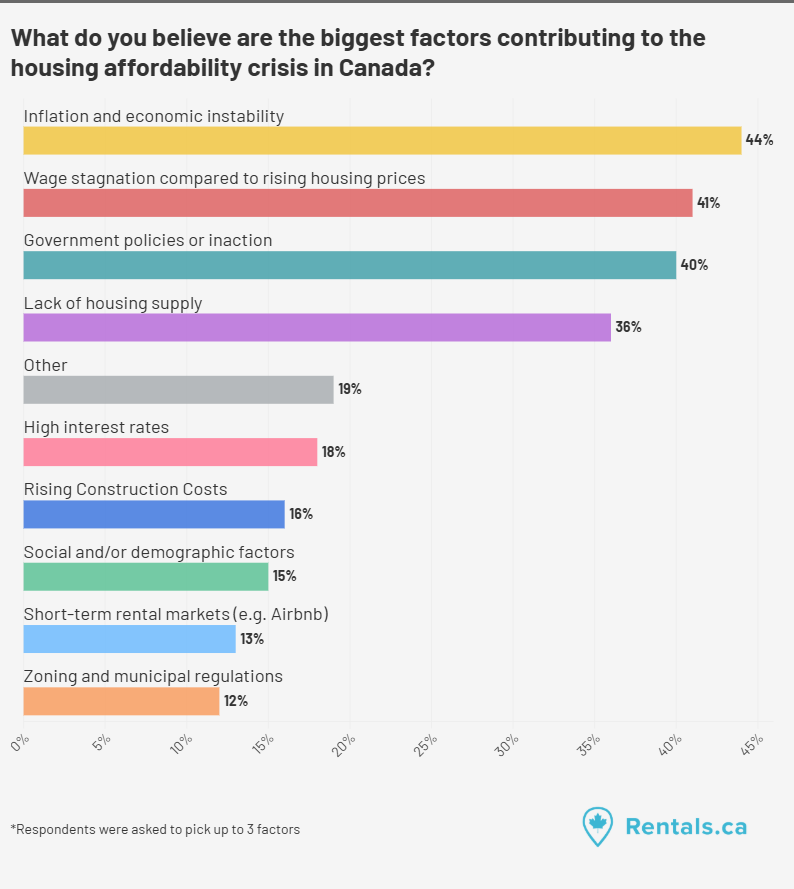
This signals a shift in public perception: renters are just as concerned about affordability pressures and economic fairness as they are about supply constraints.
Key Issues for Undecided Voters
While issues for currently undecided voters were similar to the broader population, they did skew more towards concerns with inflation and wage stagnation, indicating that addressing the overall cost of living could be the key for parties hoping to win over these swing voters:
- Inflation and economic instability – 50%
- Wage stagnation compared to housing prices – 47%
- Government policies or inaction – 38%
- Lack of housing supply – 38%
- High interest rates – 19%
- Rising construction costs – 16%
- Short-term rental markets (e.g., Airbnb) – 14%

Undecided voters also showed very low confidence in the ability of any national party to improve housing affordability, with every party having well over 50% of respondents indicating “Low Confidence”, and less than 10% indicating “High Confidence”

Housing Policy Is a Priority for Renters
Renters overwhelmingly see housing as a major election issue:
- 60% said housing policy is very important to them.
- 22% said it is important.
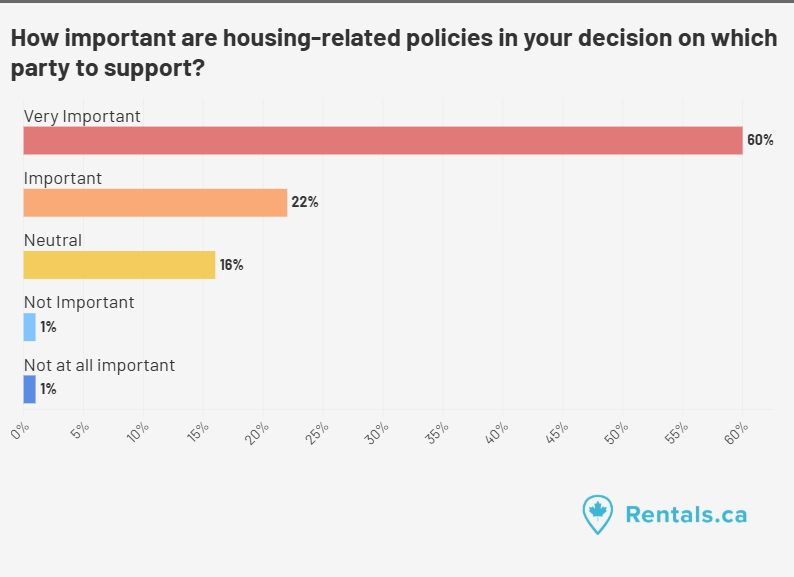
That means more than four in five respondents consider housing policy a key issue heading into the 2025 election.
Confidence in Political Parties Is Low
Despite the issue’s importance, renters remain skeptical of political leadership:
- Confidence in any party’s housing plan is low across the board.
- The Conservative Party earned the highest level of “high confidence,” but still from only about 21% of renters.
- Confidence was higher among voters who considered themselves informed, regardless of party affiliation.
Most Renters Are Still Undecided
The largest voting group in the survey wasn’t aligned with any party at all—35% of renters are undecided about how they will vote. That’s more than the share backing either the Conservatives or Liberals.
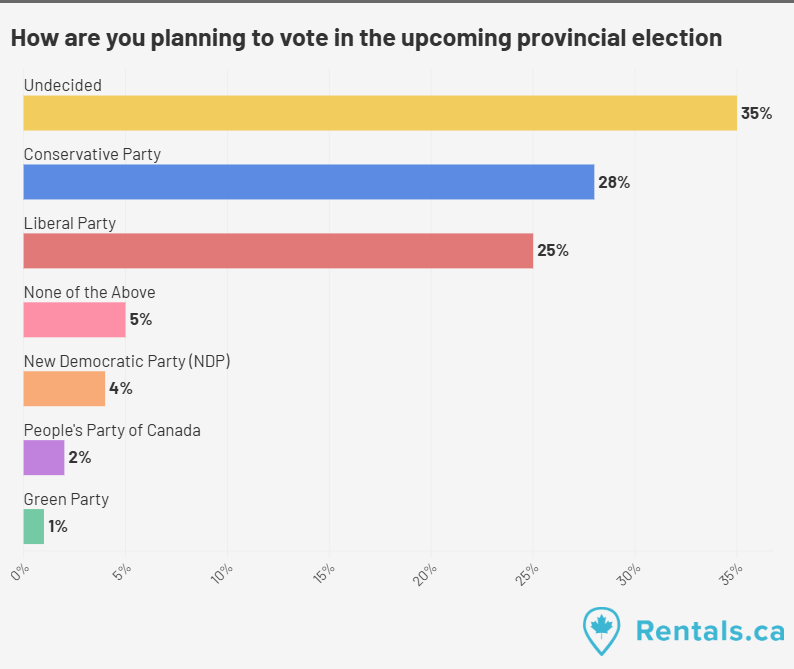
Among decided voters:
- Conservative Party leads narrowly at 28%
- Liberal Party follows closely at 26%
- NDP, Green, and PPC trail significantly

Rentals.ca is Canada’s premier online marketplace for renters and landlords, providing a comprehensive suite of tools and resources tailored to simplify the rental process. With an extensive selection of listings across the country, Rentals.ca offers user-friendly search functionality that helps renters find their perfect home efficiently. For landlords, Rentals.ca delivers effective advertising solutions to maximize visibility and fill vacancies faster. Committed to innovation and excellence, Rentals.ca aims to empower users with up-to-date market insights and expert guidance, making renting easier and more accessible for everyone.